
A 911 in Naples, FL, and a buyer with a Porsche checklist
A 2017 Porsche 911 for sale at a dealer in Naples, FL was the car this buyer wanted, and the buyer wanted an independent set of eyes on it first. The buyer booked a Gold Inspection, and an inspector in our network went to the car.
The buyer flagged eight focus areas at booking: engine and transmission, tires and brakes, body and paint, accident or flood damage, underbody and rust, electrical and A/C, warning lights and codes, and the interior. That is close to the whole car. The buyer also noted that the dealer had a lift available, so the car could be examined from underneath.
The booking came with a Porsche-specific checklist too. It asked for a PIWIS 3 or Durametric scan of all modules including the DME over-rev report ranges 1 to 6, a paint thickness gauge, a borescope look at the cylinder walls for bore scoring, engine operating hours compared against the odometer, camshaft deviation values, compression and leak-down results, and a lift inspection covering the rear main seal, coolant lines, leaks and suspension.
A list like that shows a buyer who has done the reading. Not every item on it falls inside a Gold Inspection, and the report is clear about what was and was not recorded.
What does a Gold pre-purchase inspection check on a 2017 Porsche 911?
A Gold Inspection covers the body, underbody, interior, electrics, engine, transmission, driveline, steering, suspension, brakes and exhaust, plus an OBD-II scan and road test. It includes everything in the Silver package, then adds an extended road test with live OBD-II data capture, a full electronics and infotainment audit, and panel-by-panel paint-depth readings. The findings go into a photo-documented PDF report with a plain-English go, caution or stop summary.
The scope matters on a performance car like the 911 because the expensive surprises tend to hide in places a test drive cannot reach. Panel gaps and paint condition show whether the body has been repaired. An underbody check catches leaks, corrosion and structural repair. Live data shows how the engine manages fuel and temperature while it is actually working, and a stored-code scan shows what the car's computers have logged.
The cabin of a modern sports car carries a lot of electronics: a touchscreen, cameras, sensors, driver-assist systems and power seats. The Gold electronics audit tests those one by one rather than assuming they work because the dash lights up.
A Gold Inspection does not include a borescope, a compression or leak-down test, camshaft deviation values, a PIWIS or Durametric over-rev report, or an engine-hours comparison. None of those appear in this report. Two Gold items were also not recorded here: brake pad and rotor measurement was listed as not measured because of no access, and paint-depth readings were listed as not measured, not applicable.
What did the inspection find on this 911?
The inspection found no stored codes, no visible leaks, no accident or flood evidence, and a car that drove the way a 911 should. The inspector's summary put it plainly: the car is as expected for its age with normal wear, it "drives amazing and handles just the way you would expect Porsche to handle," and there were no signs of abuse or flooding.
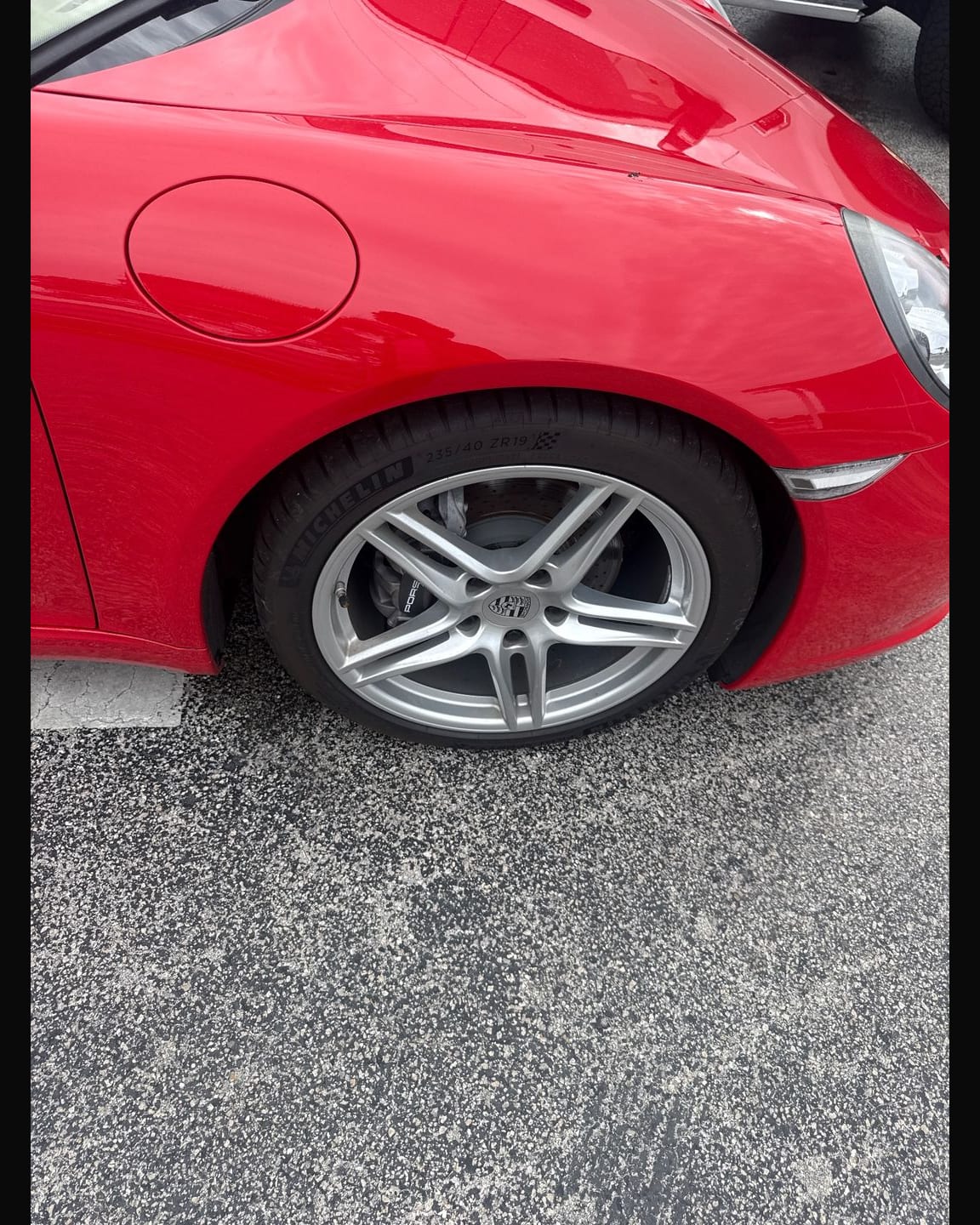
The exterior rated well across the board. Paint and body showed normal wear, panel gaps were even and original, glass and lights were all good, and the wheels were good. Tire tread measured healthy at more than 6/32 inch, and the inspector found no rust on the body.
Underneath, the frame was solid and rust or corrosion was minimal. The exhaust system rated good, the suspension was tight, CV boots, bushings and mounts were good, and the driveline rated good. The visible-leaks check, which is where a rear main seal or coolant-line seep would show, came back with none.
Under the hood, the oil was clean and full, the coolant was full and clean, and belts and hoses were good. The cold start and idle were rated smooth. The OBD-II scan returned no codes.
Inside, the seats and upholstery rated excellent, heat and A/C both worked, every seat belt functioned, and the cabin smelled clean. The inspector noted general interior wear, nothing excessive, and rated it consistent with the car's age and use. The inspector's closing view was that this is a reliable, enjoyable car to own.
Which findings on this 911 deserve a closer look?
Two items were flagged: a slight exhaust noise at idle and minor faults in the dash and electronics. Neither changed the overall guidance, but both are worth resolving before you sign.
The exhaust noise was recorded in the engine notes as slight and present at idle. The same report rates the exhaust system good from underneath and the cold start and idle smooth, so the noise did not come with other symptoms. The report does not identify a source. For a buyer, that makes it a verify-first item: have the source pinned down, then treat any needed repair as a negotiating point rather than a reason to walk away.
The dash and electronics rating was minor faults, marked as a watch item. The dedicated electronics audit passed every item it tested: infotainment and touchscreen, backup camera, parking sensors, driver-assist functions, and power windows, locks and seats. The report does not say which item caused the minor-fault rating, so review the photos, ask the inspector or seller what was observed, and ask the dealer to address it before delivery.
Brakes were one of the buyer's focus areas, and pad and rotor measurements could not be taken because of no access. Until someone measures them, brakes are a budget item. Paint-depth readings were also not recorded, though panel gaps were even and original and no accident evidence was found. If gauge numbers matter to you, request them separately, along with any of the Porsche-specific engine tests from the buyer's checklist.
Reading the instrumented numbers from the Gold Inspection
The battery load test measured 842 CCA against a rating of 850 CCA, and the battery passed. A battery delivering close to its rated cold-cranking amps is doing its job, so there is no near-term battery expense indicated.
The climate readings were 59 °F at the A/C vent and 120 °F at the heater vent. Both numbers confirm that each side of the system is producing conditioned air. The report does not record the outdoor temperature, so keep the A/C figure as a baseline and compare it on a hot Naples afternoon after you take delivery.
The live OBD-II capture recorded coolant at 200 °F, short-term and long-term fuel trims both at 0 %, and an idle of 640 RPM. Fuel trims at 0 % mean the engine computer was not adding or removing fuel to correct the mixture, which is what you want to see. The coolant figure reflects a warmed-up engine, and nothing in the report suggests it ran hot.
The live data does not explain the exhaust noise at idle, but nothing in it points to the engine struggling there either. A steady idle reading, a smooth idle rating and zeroed trims together describe an engine that was running cleanly when tested.
What the Proceed verdict meant for the buyer
The Gold Inspection report on this 911 carried an overall guidance of Proceed, with no major issues. For the buyer, that meant the car checked out on body, structure, engine, driveline, interior and electronics, with nothing that called for walking away.
Proceed still left a short to-do list. Identify the source of the exhaust noise, find out what the minor dash fault is, and get brake measurements. If the buyer wanted the deeper Porsche engine checks from the original list, those would need a separate appointment with a specialist.
Proceed describes what the inspection found. It is not a guarantee about the items it could not reach. Read that way, the report gave the buyer a clear basis to move forward and a specific list of points to settle with the dealer.
What to check before buying a used Porsche 911
A used Porsche 911 inspection checklist starts before the inspector arrives. Flag your concerns when you book so they get extra attention, and ask whether the seller has a lift. Underbody access is the difference between a glance and a real look at leaks, suspension and structure.
On the car itself, make sure the inspection includes a stored-code scan and, ideally, live data on a road test. Look at panel gaps and paint finish for signs of prior repair, and ask for paint-depth readings if you want numbers. Check tire tread depth, and make sure brake pads and rotors get measured. If they cannot be reached, get the figures another way before you pay.
Listen at cold start and at idle, and note any exhaust sound you cannot explain. Test every electronic feature, from the touchscreen and cameras to the parking sensors, driver-assist systems and power seats. Run both the A/C and the heat.
Decide early whether you want engine-specific tests that go beyond a standard pre-purchase inspection, such as a borescope, compression and leak-down, or a DME over-rev report. If you do, line up a Porsche specialist alongside the general inspection rather than assuming one covers the other.
Book an independent inspection on the 911 you are considering
A pre-purchase inspection on a used Porsche 911 gives you a photo-documented record of the car's condition before any money changes hands, and a plain go, caution or stop summary to negotiate from.
Whether you are shopping in Naples, FL or anywhere else, you can book an independent pre-purchase inspection at VehicleInspectors.com and an inspector in our network will go to the vehicle for you.