
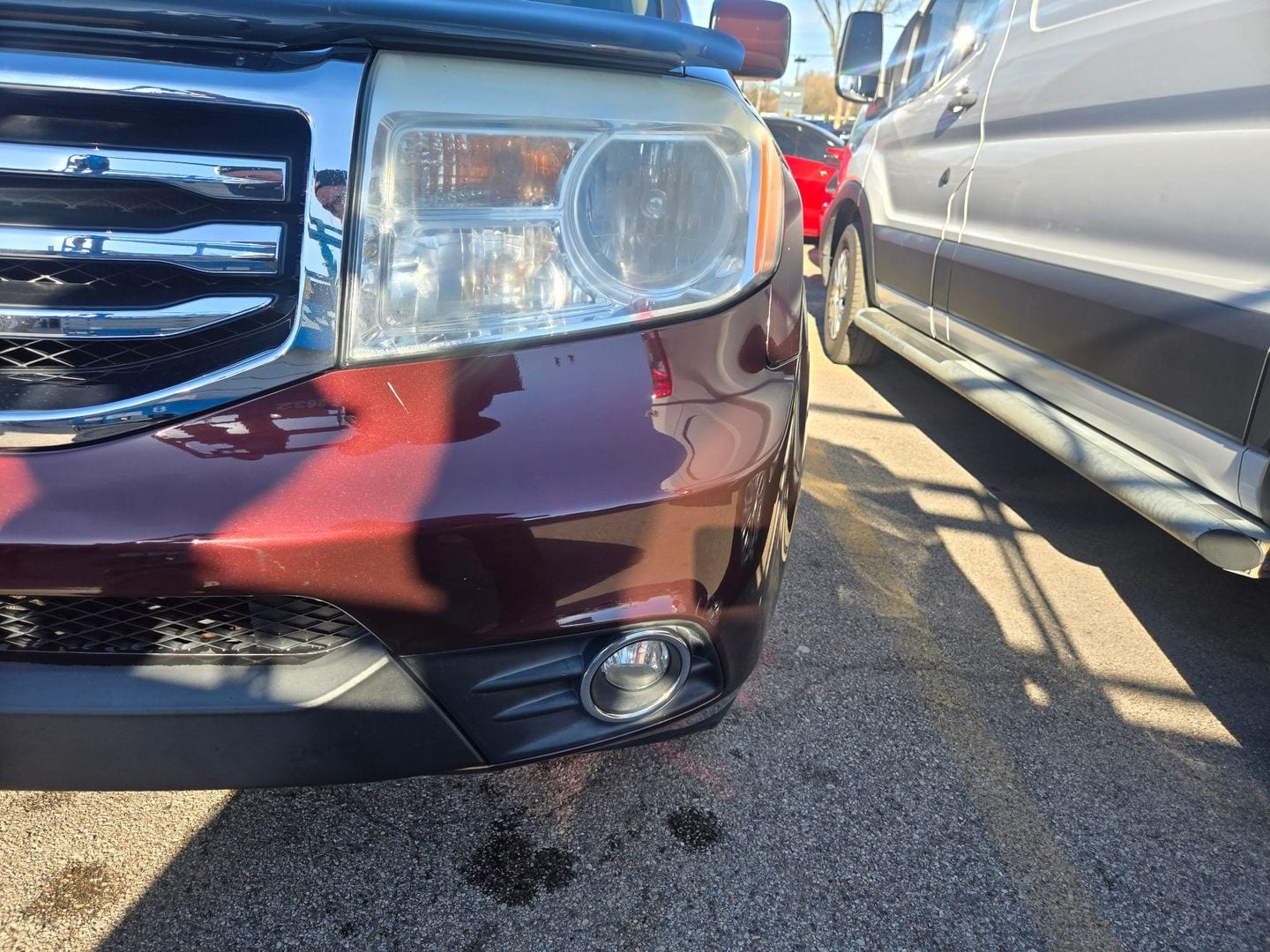
Why the buyer wanted this Pilot inspected in Highland Park, IL
A 2013 Honda Pilot for sale in Highland Park, IL was the vehicle in this Inspection Story, and the buyer wanted an independent set of eyes on it before handing over any money.
The buyer booked a Bronze Inspection and did not flag any specific concerns at booking. With no particular area to focus on, the inspector worked through the full published scope from bumper to bumper, under the vehicle and out on the road.
A three-row family SUV of this age has a history that listing photos cannot show. Paint can hide old repairs, a quiet idle in a driveway can mask problems that only appear at speed, and wear on brakes and suspension adds up on a heavy vehicle. The point of the inspection was to put all of that on paper before a price was agreed.
What does a Bronze pre-purchase inspection check on a 2013 Honda Pilot?
A Bronze Inspection covers the body, underbody, tires, glass, interior, electrics, engine, fluids, driveline, steering, suspension, brakes, exhaust, an OBD-II scan and a road test.
On the outside, the inspector looks at paint and panels for evidence of prior repair or respray, checks for scratches, cracks, dents and rust, examines the glass, and looks for signs of past accident or flood damage. Underneath, the check covers rust, frame damage and structural repair, along with steering, suspension, braking components, the exhaust and all driveline components, including four-wheel and all-wheel-drive systems.
Those checks matter on an SUV like this one because weight works the brakes, tires and front suspension hard. The road test, done where the vehicle is street legal, insured and the weather is safe, is where pulls, vibrations and shifting behavior actually show up. A parked inspection alone would have missed most of what this report flagged.
The Bronze tier does not include instrumented measurements. There were no brake pad thickness readings, battery tests or paint thickness readings on this inspection; those tests belong to the Silver and Gold tiers. What the buyer received was a photo-documented PDF report with a plain-English go, caution or stop summary.
What the inspector found in good shape
The engine bay was the strongest part of this Pilot's report. Oil was rated clean and full, coolant was full and clean, belts and hoses were rated good, and the inspector noted no visible leaks at the time of inspection. The cold start and idle were smooth.
The OBD-II scan returned no stored trouble codes. That is a reassuring result for the engine and emissions systems, though it says nothing about how the brakes or steering behave on the road.
Inside, the SUV held up well. The dash and electronics all worked, both heat and air conditioning worked, every seat belt functioned, and the cabin was clean with no odors. The inspector rated seat and upholstery wear as normal, noting typical wear on the driver's seat and the center armrest, and judged overall interior wear to be consistent with the mileage.
Several other items came back good: glass and lights, the exhaust, the driveline, and rust and corrosion across the undercarriage, which was rated minimal.
What did the inspection find wrong on this Pilot?
The road test found brake pulsation, a pull to the left and front-end shake, alongside paint, panel and tire issues that need attention.
Three road-test items were rated as problems. Braking was marked for pulling and noise, with the inspector noting pulsation when braking. Steering was marked for pulling and looseness, with the vehicle pulling to the left. Noises and vibrations were rated notable, and the undercarriage note recorded that the front end shakes a little while driving. The report does not name a single cause, so for a buyer these are items to have diagnosed by a shop, with a written quote, before agreeing on a price. If the seller will not allow that, or the quote is more than you are prepared to take on, that becomes a walk-away item.
Two more road-test items were rated watch: some hesitation in the transmission and shifting, and minor vibration at highway speed. Neither triggered a trouble code. A shop visit for the front end is a sensible moment to have the shifting looked at as well.
The body carries cosmetic and possible repair concerns. Paint is peeling on the rear driver's side bumper, and the front left quarter panel sits slightly out of alignment and obstructs the door. Panel gaps were rated minor, and accident or flood evidence was marked as possible signs. A buyer should ask the seller directly about any past collision and repair, and treat the panel fit and paint as negotiating points.
The remaining watch items are budget items. Tire tread was rated fair at 3–5/32 inch, the wheels have curb rash, exterior rust was surface only, the frame shows surface rust, and the suspension, CV boots, bushings and mounts were each rated as minor wear.
What proceed with caution meant for this buyer
The proceed with caution rating on this Pilot meant the vehicle was not a stop, but it was not a clean go either. The inspector summed it up in one line: "Needs some cosmetic work and front end work. But this unit has potential."
The potential sits in the parts that are hardest and most expensive to judge: a clean engine bay, no leaks, a smooth cold start, no stored codes, a healthy interior and a driveline rated good. The caution sits in the front end and brakes, which affect how the vehicle stops and steers, and in body work that hints at a past repair.
For a buyer, the practical path from a caution rating is to get the brake pulsation, left pull and front-end shake diagnosed and priced, factor in tires and cosmetic repairs, and use the full picture to negotiate. If the numbers still work after that, a vehicle with a strong mechanical core can be a reasonable buy.
What to check before buying a used Honda Pilot
Shoppers looking at a used Pilot or a similar three-row SUV can use this inspection as a working checklist. Start with the road test, because that is where this report found its problems. Brake firmly from moderate speed and feel for pulsing through the pedal or wheel. On a straight, level road, loosen your grip slightly and see whether the vehicle drifts to one side.
Pay attention to the front end at different speeds. A shake at low speed, a vibration on the highway and any clunks over bumps are all worth noting and passing on to a mechanic. Watch for hesitation when the transmission shifts, especially pulling away from a stop.
Walk the body slowly in good light. Look for paint that is peeling or does not quite match, and open and close every door. A door that catches on a panel, or a panel that sits proud of its neighbor, points to a possible past repair and is a fair question for the seller.
Check the tires and wheels. Look at tread depth across each tire and note curb rash on the rims. Fair tread is a near-term expense you can fold into your offer.
Get underneath, or have someone do it for you. Surface rust on the frame and underbody is different from structural corrosion, and worn suspension parts, bushings and CV boots add up. Finally, remember that a clean OBD-II scan is good news for the engine but does not clear the brakes, steering or suspension.
Get an independent look before you buy
A used SUV can look tidy in the driveway and still need front-end work that only shows up on the road. An independent inspection puts those findings in writing while you still have room to negotiate or walk away.
If you are shopping for a Pilot or any other used vehicle, you can book an inspection at VehicleInspectors.com and an inspector in our network will go to the vehicle for you.