
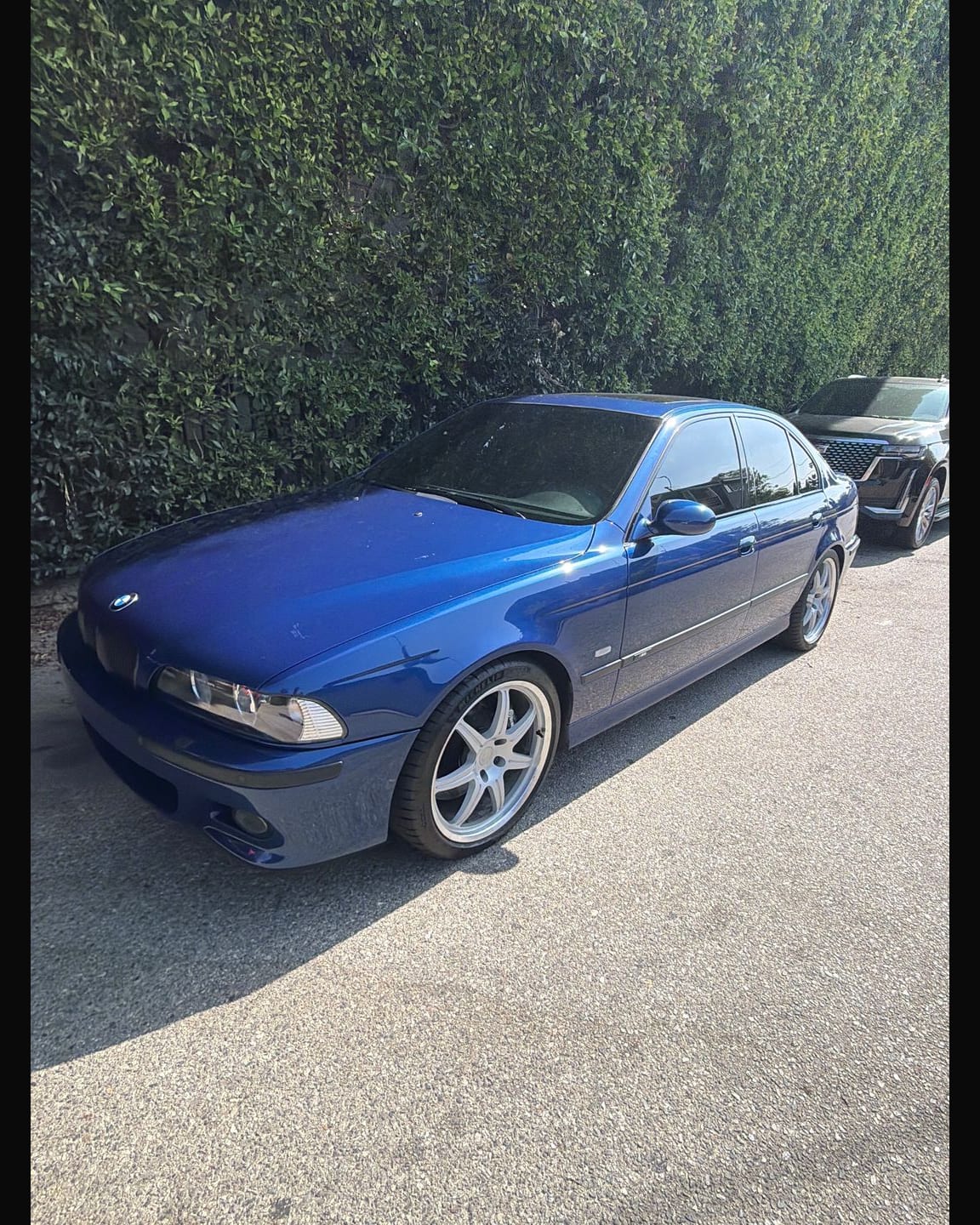
The car and why the buyer booked a Gold Inspection
The 2003 BMW M5 in this Inspection Story was for sale in West Hollywood, CA, and the buyer booked a Gold Inspection before committing to it. An inspector in our network went to the car and worked through the full Gold scope, from paint and glass to a code scan and an extended road test.
The buyer didn't list any specific concerns at booking. With no single worry to chase, the inspection worked as a broad health check. What condition is the car really in, and is there anything that should change the price or the decision?
An open brief suits a car of this age. A performance sedan from the early 2000s can look sharp and drive well while still holding problems that only show up in stored codes, underneath the engine, or over a stretch of real road. Finding those before the money moves is the point of a pre-purchase inspection.
What does a pre-purchase inspection check on a 2003 BMW M5?
A Gold Inspection on this M5 covered the body, underbody, interior, electronics, engine bay, drivetrain, an OBD-II code scan and an extended road test. Each area answers a different question about how the car has been treated.
Outside, the scope includes body and paint condition with evidence of prior repair or respray, scratches, cracks, dents and rust, glass flaws, tires and wheels including tread depth, and signs of accident or flood damage. Underneath, it covers rust, frame damage, structural repair, steering, suspension, brakes and the exhaust system.
Under the hood, the inspector makes a visual inspection of the engine and surrounding components, checks fluid levels, and looks for oil leaks and missing parts. Inside, the scope runs through upholstery, mats, headliner and seat belts, plus lights, A/C, gauges, every electrical item, and a full electronics and infotainment audit.
The code scan and the road test carry extra weight on a car like this. Stored codes can record faults the engine computer flagged even when the car seems to run normally. The extended road test with live OBD-II data capture shows how the engine, transmission, brakes and suspension behave in real driving, which a parked look-over can't. Results go into a photo-documented PDF report with a plain-English go, caution or stop summary.
A pre-purchase inspection is not a teardown or a repair diagnosis. It identifies what needs attention, and some findings need further work to pin down a cause. This report flagged exactly that kind of item. The report also recorded no instrumented readings, so there are no measured numbers to interpret here.
What the inspector found in good shape
The inspector's overall verdict on the M5 was good condition and a car that drives well. Most of the report reads like a car that has been looked after.
The interior was rated excellent, with no noticeable defects. All electronics worked, and the A/C and heat functioned properly. The cabin had no smoke or pet odors, and wear was consistent with the mileage.
Under the hood, coolant level was normal, belts and hoses showed no visible issues, and the oil's condition appeared normal. The engine started and idled normally.
On the road test, braking was good, steering was straight and responsive, and shifting was smooth. Ride quality was comfortable overall, the A/C blew cold, and the inspector noted no abnormal vibrations or pulling. The exterior was in good condition overall, with only minor trim and liner items noted.
What problems did the inspection find on this M5?
The inspection found stored misfire and catalytic converter codes, low oil, minor oil seepage, a rear suspension squeak and two small body items. None stopped the car from driving well, but each needs an answer.
Stored engine codes were the headline. The OBD-II scan returned a catalytic converter efficiency code for Bank 1, misfire codes for cylinders 5, 6 and 7, and a multiple-cylinder misfire code. A stored code is a record that the engine computer detected a fault at some point. On its own, it doesn't identify the cause. The engine started, idled and drove normally during the inspection, which is useful context but not a clearance. Treat these codes as a diagnose-before-you-buy item, because the cause decides whether they end up a modest repair, a budget item or a reason to walk away.
Engine oil sat at the minimum mark, though its condition appeared normal. Low oil may simply mean the car is due a top-up, but it's worth asking the seller when the oil was last changed and whether the car has needed oil between services.
Minor oil seepage showed on the underside of the engine. The engine-bay check found no visible fluid leaks from above, so this was seepage seen from underneath. Treat it as a budget item and have the source identified, so you know whether it needs fixing now or can be monitored.
A minor squeak came from the rear suspension area over small bumps on the road test. The inspector couldn't pinpoint the source during the drive and noted it would need further inspection on a lift. Until someone finds it, the squeak is an unknown, and unknowns are fair ground for negotiation or a condition of sale.
Two small body items rounded out the list. The windshield molding and weatherstrip are dry and aged, and the left front inner fender liner is damaged. Both are minor next to the engine codes, but they are reasonable points to raise when you talk price.
What did Proceed with caution mean for this M5?
Proceed with caution meant the M5 wasn't a walk-away, but it wasn't a clean pass either. Several items needed answers before purchase.
The go, caution and stop summary on a Gold Inspection report is built for this kind of call. Go means nothing on the report should hold up the purchase. Stop means a finding serious enough to walk away. Caution sits in between: the car may be a good buy, but specific items need follow-up first.
The practical path for a car with this report is short. Have a qualified shop diagnose the misfire and catalytic converter codes. Bring the oil to the correct level and ask about consumption and service history. Get the car on a lift to trace the rear squeak and the source of the seepage. Then use what you learn to negotiate, budget, or decide.
The strong parts of the report narrow the question without settling it. An excellent interior, working electronics and a smooth road test say a lot about how the car has been kept. The engine codes are the item most likely to change the picture, so they deserve the most attention before you sign.
What to check before buying a used BMW M5
A used BMW M5 inspection checklist starts with a code scan. Ask for an OBD-II scan even if no warning lights are on and the car feels healthy. Stored codes can tell you about faults that a short drive won't reveal.
Check the oil level and look at the oil's condition. If the level is low, ask the seller how often the car needs oil and when it was last serviced. Then look under the engine for seepage or wet areas, and ask for service records that cover any past oil-related work.
Drive the car over small bumps with the radio off and listen for squeaks or knocks from the suspension. If you hear something you can't place, ask for a lift inspection before you commit, so the repair can be identified and priced.
Look at the rubber around the windshield and the plastic liners inside the wheel wells. Dry seals and damaged liners are small items, but they are worth noting for the price conversation.
Test every electrical item, including the A/C and heat, and notice any smoke or pet odors inside. Finally, get the findings in writing. A photo-documented report gives you something concrete to negotiate with, or a clear reason to keep looking.
Booking an inspection on a similar car
A pre-purchase inspection is the cheapest way to find out what a car is hiding before it becomes yours. This M5 looked and drove like a well-kept car, and the code scan still turned up items that deserved a closer look.
If you're shopping for a similar car, in West Hollywood, CA or anywhere else, you can book an independent pre-purchase inspection at VehicleInspectors.com and have an inspector in our network go to the vehicle for you.