
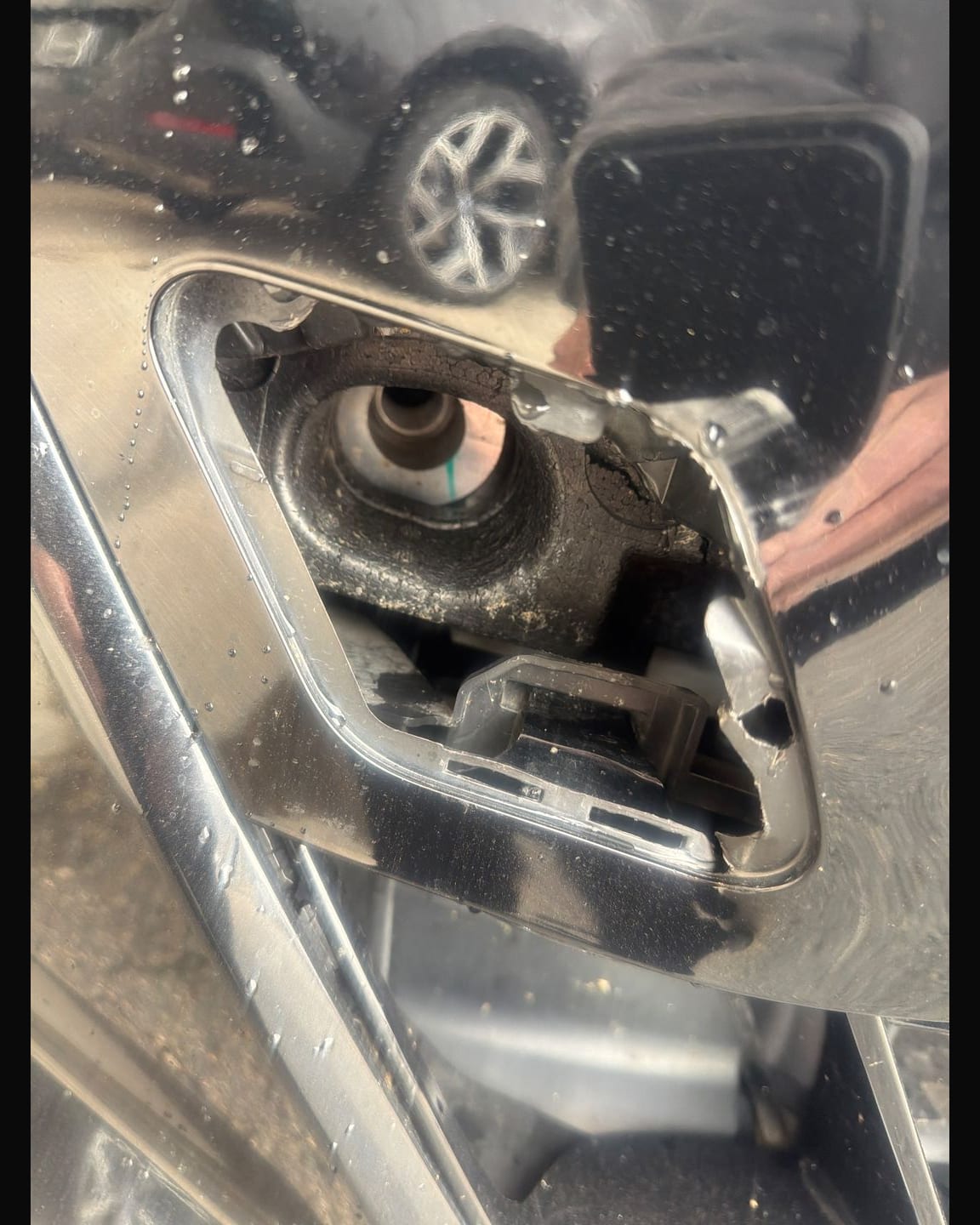
Why a buyer in Lubbock wanted this 760xi inspected
A 2024 BMW 760xi in Lubbock, TX was the subject of this Gold Inspection, booked by a buyer who wanted an independent look at a nearly new luxury sedan before committing to it.
The buyer's booking notes were unusually thorough. The focus areas covered engine and transmission, tires and brakes, body and paint, accident or flood damage, underbody and rust, electrical and A/C, warning lights and codes, and the interior. On top of that, the buyer asked the inspector to pay particular attention to cosmetic flaws: dents, dings, scratches, rock chips and scuffs.
The specific requests went further still. The buyer wanted a BMW ISTA diagnostic scan of every accessible module, a close mechanical look at the V8, twin turbos, cooling system, transmission, AWD system, suspension and drivetrain, paint-depth readings on all panels, undercarriage photos, and a test of the luxury features, including the rear executive seating, massage functions, theater screen, Bowers & Wilkins audio, cameras and driver-assistance systems. A highway road test and tire, pad and rotor measurements rounded out the list.
Those requests make sense. A car this new carries an assumption that everything works, and a buyer pays for that assumption. The point of the inspection was to test it.
What does a Gold pre-purchase inspection check on a 2024 BMW 760xi?
A Gold Inspection covers body, paint, underbody, tires, glass, electrical, interior, engine, transmission, driveline, brakes, an OBD-II scan, a road test and instrumented tests. The tier includes everything in Silver and adds an extended road test with live OBD-II data capture, a full electronics and infotainment audit, and paint-depth readings panel by panel.
Each of those additions matters on a car like this one. Paint-depth readings can reveal refinishing that is invisible to the eye, which speaks directly to the buyer's concern about prior collision repair. Live data captured during the road test shows how the engine is running under real load, not just at idle in a driveway. An electronics audit matters because a luxury sedan leans heavily on screens, cameras and driver-assistance systems, and a fault in any of them can be expensive to chase later.
The Gold scope also includes an inspection of all driveline components, including all-wheel-drive systems, which covers the buyer's AWD request, along with steering, suspension, brakes, exhaust, fluid levels, leaks and a visual check of everything under the hood. The report itself is a photo-documented PDF with a plain-English go, caution or stop summary.
Knowing the limits helps too. The scope lists an OBD-II scan with stored trouble codes; a BMW-specific ISTA module scan is not part of the published package. The checks are visual and functional, and the inspector noted that the underbody shields would need removal to inspect and photograph what sits behind them. Brake pads and rotors could not be measured on this car because there was no access.
What did the inspection find on this 760xi?
The inspector found a car that looks and drives like new, with every rated item marked good and every audited system working. The inspector's summary put it plainly: no problems found, and all systems work and function as they should.
The interior was described as very clean. Seats and upholstery were rated excellent, odors clean, and wear consistent with the car's age and use. Dash electronics all worked, heat and A/C both worked, and every seat belt functioned.
Under the hood, the oil was clean and full, the coolant full and clean, and belts and hoses in good shape. The inspector found no visible leaks, and the cold start and idle were smooth.
The visible underside checked out as well. The frame was rated solid, rust and corrosion minimal, and the exhaust good. Suspension was tight, CV boots, bushings and mounts were good, and the driveline, including the all-wheel-drive system, was rated good. Outside the shielded areas, the inspector saw no rust or damage anywhere on the car.
On the road, braking was smooth and straight, steering centered and tight, and shifting smooth. Highway behavior was stable with no noises or vibrations, and the inspector noted the car sounded great at highway speed. The inspector also noted the car was wearing new tires.
Watch items: stored codes, shielded underbody and unmeasured brakes
The OBD-II scan is the one open item on this report. The inspector recorded a lot of stored codes, documented in photos rather than listed in the written notes, and recommended a dealer rescan to make sure everything is good. A car that drives without a single fault but stores codes is not unusual territory for a complex modern sedan, yet the codes still need to be read and explained by someone who can interpret them. For a buyer, treat the dealer rescan as a step to complete before money changes hands, not a walk-away item.
The underbody shields are a coverage limit rather than a finding. Everything underneath this 760xi is covered, so the areas behind the shields were not inspected or photographed. The buyer had asked for detailed undercarriage photos, and anyone with the same priority should know that shield removal goes beyond a visual check.
Brake pads and rotors were not measured because there was no access. The road test rated braking smooth and straight, which is reassuring, but it is not a measurement. Pad and rotor life is worth confirming through service records or a separate check, and it is a reasonable budget question to raise with the seller.
The electronics audit itemized the infotainment, backup camera, parking sensors, driver-assist systems and power windows, locks and seats, and all passed. The buyer's more specific features, such as the rear executive seating, massage functions, theater screen and premium audio, are not listed individually, though the inspector's summary states that all systems work. If those features drive your purchase, test each one yourself.
How to read the instrumented numbers on this report
The battery load test measured 725 CCA against a rating of 760 CCA, and the verdict was a pass. A healthy battery delivers close to its rated cold-cranking amps, and this one did. There is nothing here to budget for.
The A/C vent read 37 °F, which is properly cold air and matches the 'both work' climate rating. The heater vent read 80 °F at the time of the test. Vent readings depend on conditions and settings, so if heater output matters to you, feel it for yourself on a test drive.
Paint depth ran from 146 µm to 154 µm across seven panels: hood 152, roof 150, left front door 148, right front door 147, left rear quarter 147, right rear quarter 146, and trunk 154. The figure to watch is the spread, and an 8 µm range is tight. A panel that has been refinished or filled typically reads noticeably thicker than its neighbors, and none did. The recorded list does not include the front fenders or rear doors.
The live data from the extended road test showed a coolant temperature of 195 °F, an idle of 800 RPM, a short-term fuel trim of 3 % and a long-term fuel trim of 5 %. Fuel trims show how much the engine computer is adjusting fuel delivery; small single-digit values like these indicate modest correction, consistent with an engine that ran smoothly on the road test.
Is a used 760xi with stored codes worth buying?
A used 760xi in this condition is worth pursuing, provided a dealer rescan confirms the stored codes are not hiding an open fault. The report's guidance was 'Proceed — no major issues', and every mechanical, structural, interior and road-test item was rated good.
The stored codes are the reason to slow down, not stop. The inspector's recommendation was specific: have a dealer rescan the car and confirm everything is good. That lines up with the buyer's original request for a module-level BMW scan, which is a dealer-level job rather than part of the Gold scope.
The practical path is to ask the seller to arrange the rescan, or to make the sale conditional on it. While that happens, confirm brake pad and rotor condition and decide whether you want the underbody shields removed for a closer look. None of those steps change the overall picture of a clean, well-kept car; they close the gaps the inspection could not.
What to check before buying a used BMW 760xi
Start with the codes. Ask for a scan before you agree on terms, and if any are stored, have a dealer or a shop with BMW-capable software read every module and explain what each one means. A car that drives perfectly can still store codes worth understanding.
Ask for paint-depth readings on every panel, including fenders and rear doors. Look for consistency from panel to panel rather than any single number, and follow up on any panel that reads noticeably thicker than the rest.
Plan for the underside. If you want the area behind the underbody shields seen and photographed, arrange in advance for a shop that can remove them. Ask for brake pad and rotor measurements, or service records showing when the brakes were last done.
Test the luxury features one by one: rear seats, massage functions, rear screens, audio, every camera and each driver-assistance function. Insist on a road test that includes highway speed, and listen for noises and vibrations. Finally, check tire tread and that interior wear matches the car's stated history.
Book an independent inspection before you buy
The Lubbock buyer went in with a detailed list and came away with a clear answer: a car that looks and drives like new, plus one specific step to finish before purchase. An independent inspection gives you that same clarity on the car you are considering.
If you are weighing a similar sedan, you can book an inspection at VehicleInspectors.com and have an inspector in our network check it for you.